



Home theater seating is a specialized category of upholstered furniture. Unlike standard living room sofas, cinema seating needs to work within a planned entertainment space.
For furniture importers, interior designers, project contractors, and home cinema suppliers, choosing the right seating involves several decisions.
These may include seating capacity, room dimensions, reclining functions, upholstery, accessories, and product configuration.
A successful project begins with understanding the room and the people who will use it. The product should then be selected according to the actual layout and project requirements.
1. Understand the Type of Home Theater Project
Before selecting seating, buyers should identify the type of space being furnished.
Different projects may have different requirements.
Private home cinema
A private cinema room may be designed for a family or individual homeowner. Comfort, appearance, and seating arrangement are often important considerations.
Residential media room
A media room may also be used for watching television, gaming, or general relaxation. Buyers may prefer seating that combines cinema-style features with a living room appearance.
Commercial entertainment space
Commercial projects may require more detailed planning around seating capacity, layout, cleaning, and maintenance requirements.
Understanding the intended application helps buyers select a more appropriate seating configuration.
2. Measure the Room Before Choosing the Seats
Room measurements should be collected before confirming the product arrangement.
Important measurements include:
- Room width and length
- Available seating area
- Ceiling height
- Doorway and access dimensions
- Distance between seating rows
- Available walking paths
- Screen position and viewing direction
Buyers should also consider the space required when a recliner is fully extended.
A chair that fits comfortably in its upright position may require additional clearance when reclined.
For projects with multiple rows, the layout should be reviewed carefully to make sure that the seating arrangement works with the room.
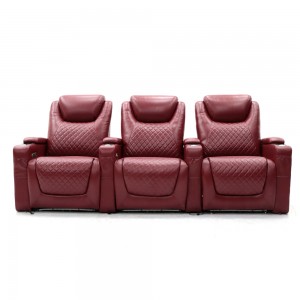
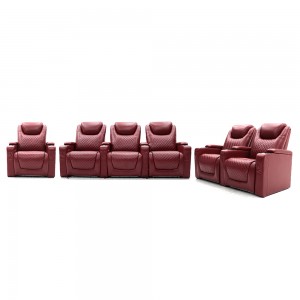
3. Select the Right Seating Configuration
Home theater seating can be arranged in several formats.
The suitable configuration depends on the room size, seating capacity, and project design.
Individual Theater Recliners
Individual seats provide flexibility when arranging a cinema room.
They can be placed separately or combined into rows according to the project layout.
Two-Seat Configurations
Two-seat arrangements may be suitable for smaller rooms or projects where buyers want paired seating.
Multi-Seat Theater Sofas
Multi-seat configurations can help create a more integrated seating arrangement.
Buyers should confirm the overall dimensions, armrest design, and reclining functions for each seat.
Customized Seating Arrangements
Some projects may require special spacing, console arrangements, or other customized details.
These requirements should be discussed with the manufacturer before production.
Explore JKY's Home Theater Seating collection for available seating styles.
4. Decide Which Functions Are Required
Modern home theater seating may include several optional functions.
However, more functions do not automatically make a product suitable for every project.
Buyers should decide which features are important for the intended user and room design.
Possible options, depending on the selected model, may include:
- Manual or power reclining
- Power headrest adjustment
- Lumbar support adjustment
- Cup holders
- USB charging
- Storage compartments
- Ambient lighting
- Reading lights
- Tray tables
- Additional comfort functions
The exact availability of these options should be confirmed for each model.
For a project with several seats, buyers should also decide whether all seats need the same configuration or whether selected seats require different options.
5. Choose Upholstery According to the Project
Upholstery influences the appearance, comfort, and maintenance requirements of home theater seating.
Different materials may be suitable for different project styles.
Leather and leather-look materials
These may be considered for projects seeking a smooth, structured appearance.
Fabric upholstery
Fabric offers different textures and visual styles and may be suitable for residential media rooms.
Special color requirements
Some projects require seating that matches the room's wall colors, flooring, or interior design.
Buyers should request material samples and confirm the selected color before production.
For projects involving several rows of seats, consistent material and color selection can help create a more unified appearance.
6. Consider the Product Dimensions and Installation Process
Product dimensions should be reviewed together with the room layout.
Before ordering, buyers should request the relevant product measurements, including:
- Overall width
- Overall depth
- Overall height
- Seat width
- Seat depth
- Seat height
- Reclined dimensions
- Required installation clearance
For multi-seat arrangements, buyers should also check the overall width of the complete configuration.
Delivery access is another important consideration. Doorways, corridors, stairs, and elevators may affect how the seats can be moved into the room.
If the project requires assembly after delivery, buyers should confirm the packing arrangement and installation instructions.
7. What Should Buyers Ask a Home Theater Seating Manufacturer?
When evaluating a supplier, buyers should look beyond product photographs.
A useful supplier discussion should cover:
Product range
Does the manufacturer offer different seating configurations and styles?
Customization
Can the manufacturer discuss upholstery, dimensions, and selected functions?
Technical information
Can product drawings, dimensions, and relevant specifications be provided?
Sample arrangements
Can buyers review a sample or reference model before confirming a larger project?
Quality control
What inspection procedures are followed during production and before packing?
Packaging
How are the seats packed, and what information is available for transportation planning?
Project communication
Can the manufacturer clearly confirm specifications, order quantities, and delivery arrangements?
These questions help buyers understand whether a supplier can support the practical requirements of the project.
8. JKY Home Theater Seating Manufacturing
JKY manufactures home theater seating for buyers looking for residential cinema and entertainment seating products.
Depending on the selected model, product discussions may cover reclining functions, upholstery materials, cup holders, USB charging, power headrests, and other optional accessories.
Buyers can share their room layout, preferred seating capacity, reference images, and functional requirements for an initial discussion.
You can explore JKY's Home Theater Seating collection to review the product range.
For buyers developing a broader residential furniture collection, JKY also offers Recliner Chairs and Recliner Sofas.
9. Prepare a Project Brief Before Requesting a Quotation
A clear project brief can make communication with the manufacturer more efficient.
We recommend preparing:
- Project type and application
- Room dimensions
- Required seating capacity
- Preferred seating configuration
- Product reference images
- Upholstery preferences
- Required reclining functions
- Optional accessories
- Estimated quantity
- Destination country
- Target delivery schedule
Even if some information is not available at the beginning, buyers can start with the room measurements and product concept.
The manufacturer can then discuss the remaining technical details.
Frequently Asked Questions
Q1: What is the difference between home theater seating and a regular recliner sofa?
Home theater seating is developed with dedicated entertainment spaces in mind. It may include specific seat arrangements, accessories, and configurations for cinema-style use.
Q2: How much space should I leave behind a home theater recliner?
The required clearance depends on the chair design and its reclining mechanism. Buyers should use the manufacturer's actual upright and reclined dimensions when planning the room.
Q3: Can home theater seating be customized for a project?
Depending on the selected model, buyers may discuss upholstery, colors, seating arrangements, functions, and optional accessories with the manufacturer.
Q4: Can I order different configurations for the same home theater project?
This may be possible depending on the product range and production requirements. Buyers should confirm the model combinations and quantities before placing an order.
Q5: What information should I send when requesting a home theater seating quotation?
Provide room dimensions, seating capacity, preferred configuration, reference images, upholstery preferences, functions, and estimated order quantity.
Discuss Your Home Theater Seating Project with JKY
Whether you are sourcing seats for a private cinema, residential media room, or furniture distribution business, JKY can discuss your product requirements.
Contact our team with your project details to explore suitable home theater seating options and customization possibilities.
Post time: Oct-30-2026


