



For European rise and recline chair buyers, upholstery is no longer a small finish chosen at the end of development.
It is becoming part of how a product range is built.
A chair in dark leather-look upholstery may work well for a UK mobility retailer that needs an easy-care surface and a familiar comfort appearance. The same chair in pearl grey woven fabric may sit better in a home-care range or a softer living-room collection. A muted blue, olive, oatmeal, burgundy, or warm brown option can shift the same lift chair into a different sales context.
This is why the conversation should move beyond the old “leather vs fabric” question.
The real issue for European buyers is how to build an upholstery option set that matches the target channel, user expectation, retail positioning, and regulatory background of the market.
Why the upholstery discussion is changing
Rise and recline chairs sit in a specific place within the furniture market. They are functional chairs, but they are also daily-use seating. They may be sold through mobility retailers, home-care product distributors, specialist furniture stores, or private-label comfort seating brands.
That makes upholstery more commercially sensitive than it may appear.
- ✓ A mobility retailer may need a chair that feels practical, easy to explain, and suitable for older users.
- ✓ A furniture brand may need the same lifting and reclining function, but with a softer fabric direction that fits a living-room range.
- ✓ A private-label buyer may want one chair frame to support several upholstery versions across different price bands or customer groups.
Recent home interior coverage has also shown that recliners are being discussed with softer material language, including corduroy upholstery, hidden reclining functions, head support, and customised arm choices. That does not prove every market is moving in the same direction, but it does show that comfort seating is being judged more often through interior style and material feel, not only mechanism.
For rise and recline chair buyers, this creates a practical product question: which upholstery options should carry the range?
Leather-look upholstery still has a clear role
Leather-look and PU upholstery remain important in the rise and recline chair category.
For many mobility retail and home-care channels, these materials are familiar. They are easier to position for daily maintenance, and colours such as dark grey, navy, brown, burgundy, and warm tan still fit well with traditional comfort seating.
The more important discussion is surface language.
A glossy black or heavy dark leather-look finish can make a chair feel more traditional. A matte leather-look surface, softer hand feel, or warmer colour can make the same product easier to place in a wider retail range. For buyers building a chair collection, this difference matters because upholstery becomes part of the selling story.
In the UK, upholstery is also connected to fire-safety expectations. The UK government’s current reform work on domestic upholstered furniture aims to maintain a high level of fire safety while reducing chemical flame retardant use. (GOV.UK) For UK-facing rise and recline chair buyers, this does not mean every material discussion becomes a compliance debate. It means leather-look, PU, fabric, foam, and treatment choices should be clear enough to support product documentation when needed.
Textured fabric helps build a different chair range
Fabric is where rise and recline chairs can move into a broader home-furniture language.
Textured woven fabric, boucle-style surfaces, chenille-like textures, and soft neutral colour groups can change how a chair is understood. A pearl grey or oatmeal woven fabric does not communicate the same product position as dark leather-look upholstery. Olive, muted blue, stone, taupe, and warm grey can also help a buyer develop a more modern range without changing the core lift mechanism.
This matters especially for European buyers who want a lift chair that can sit alongside sofas, armchairs, and living-room furniture.
The fabric choice should not be treated as a loose colour extension. It should be planned as part of the product range:
- ✓ a leather-look version for easy-care mobility retail
- ✓ a textured fabric version for softer home-care positioning
- ✓ a neutral woven option for modern living-room collections
- ✓ a warmer tone for traditional comfort seating
- ✓ a darker, more practical option for everyday retail stock
This is not a buying checklist. It is how many buyers actually think when building a range: one function, several product expressions.
Material claims need to be easier to explain
European buyers are also becoming more careful with material wording.
Terms such as easy-clean, stain-resistant, water-repellent, healthcare fabric, vegan leather, PU leather, microfiber leather, and woven fabric can mean different things depending on construction and treatment. The EU’s sustainable and circular textiles strategy sets a wider policy direction for textile products to become more durable, repairable, recyclable, and largely free of hazardous substances. (Environment)
For upholstery buyers, this should not be exaggerated into a marketing slogan. The practical point is simpler: when a material claim is used in a product range, the buyer needs to know what can be explained to retailers and end users.
A fabric may look soft, but the buyer still needs to understand wear expectations and cleaning guidance.
A leather-look surface may be easy to maintain, but the buyer may still ask about touch, finish, colour fastness, and documentation.
A treated fabric may be attractive for daily use, but the wording around treatment should be handled carefully in EU-facing markets.
This is where material selection becomes part of product communication.
The real buyer problem: building the right option set
The challenge for European rise and recline chair buyers is rarely “Can we find one nice fabric?”
The harder question is how to build a material option set that makes sense across the range.
Too many disconnected colours can confuse the offer. Too few options can limit retail flexibility. A fabric board may look attractive, but it may not work once applied to a high-back chair with padded arms and a lifting mechanism. A leather-look sample may seem practical, but the final chair may feel too heavy if the colour, surface shine, and stitching do not match the target channel.
This is why upholstery should be reviewed with the actual chair model, not only as a small sample.
Backrest height, head pillow shape, armrest width, seat depth, stitching lines, and recline mechanism all influence how the upholstery appears on the finished product. A textured fabric that looks premium on a swatch may behave differently across a thick cushion. A leather-look surface that looks clean on a sample may feel too strong on a full-size chair if the finish is too glossy.
For buyers, this is where supplier support becomes useful.
Where a manufacturer can add real value
A useful recliner and lift chair manufacturer should not only say, “Many fabrics are available.”
The more useful support is helping the buyer narrow upholstery choices into a workable product range.
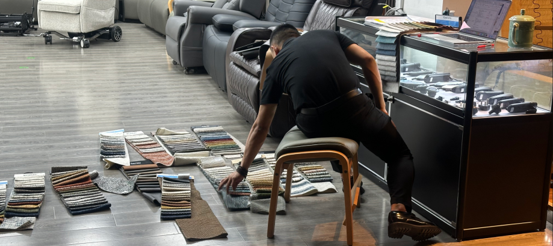
GeekSofa works across recliners, power lift chairs, and sofas, with leather-look upholstery, PU options, textured woven fabrics, and full colour swatches reviewed together with actual chair models. In development discussions, upholstery is matched with chair structure, armrest design, backrest shape, head support, stitching, and the intended sales channel.
That matters because a UK mobility retail model, a softer home-care chair, and a modern European living-room version may share similar functions but need different upholstery language.
For a buyer developing a rise and recline chair range, the starting point is usually not “Which colour is available?” It is closer to:
These are the decisions that make upholstery commercially important.
For current European rise and recline chair enquiries, it is often worth discussing the target channel first: UK mobility retail, home-care furniture, specialist comfort seating, or a private-label living-room collection. Once that direction is clear, the leather-look, PU, fabric texture, and colour options become much easier to organise into a range that buyers can actually sell.
Post time: Jul-20-2026


