



The Gulf region is witnessing a surge in demand for specialized elderly care furniture as its population ages and home healthcare expands.
In Saudi Arabia, the UAE, and other GCC countries, healthcare providers and home-care chains are investing in premium medical-grade lift chairs that combine durable engineering with patient comfort.
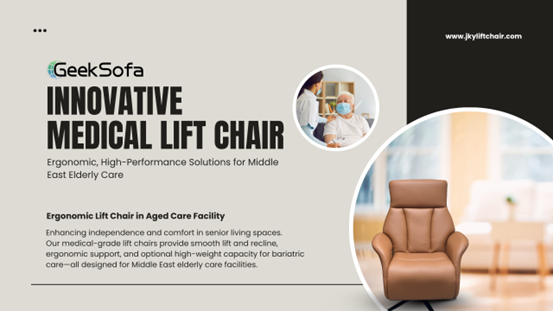
These chairs assist seniors to sit, stand, and recline safely, reducing caregiver strain while enhancing independence
Demographic data highlight the trend: PwC projects the GCC “over-50” population will rise from 14.2% in 2020 to 18.5% by 2025, and UAE authorities note the 55+ cohort is set to grow substantially in the next decade. This aging wave is driving demand for geriatric healthcare services and supportive furniture designed for home-based and institutional care.
Technical Overview
Modern medical recliner chairs are engineered for strength, comfort, and compliance. Key features of high-end lift chairs include:
Optional High Weight Capacity: Select models can support up to 250 kg using reinforced steel frames and high-torque motors. This optional feature allows care providers to accommodate bariatric patients safely while maintaining smooth lift and recline performance.
Memory Foam Seating: Thick, pressure-relieving memory foam cushions conform to the body, improving circulation and reducing pressure sores during extended sitting.
Advanced Lift Mechanisms: Dual independent motors (lift and recline) from certified international brands deliver smooth, quiet adjustment. Optional features like zero-gravity tilt and pressure-relief massage functions allow caregivers to customize positioning for therapy or relaxation.
Durable, Eco-Friendly Materials: Upholstery fabrics meet rigorous standards, including 100,000+ double-rub Martindale abrasion resistance and long-term hydrolysis resistance. Materials are easy to clean, antimicrobial, and safe for healthcare settings.
Medical-Grade Standards: Chairs carry certifications such as CE marking and ISO 9001 Quality Management. Designs comply with EN 12520 durability and safety standards, ensuring reliable long-term use in hospitals, clinics, and elderly care homes.
Ergonomic & Safe Design: Every aspect—from armrest height to recline range—is optimized for elderly mobility. Safety features such as anti-slip footrests, handrails, and emergency stop controls are integrated for secure operation.
Middle East Market Insights
Aging demographics and evolving care models are reshaping the GCC furniture market. The Middle East & Africa home healthcare market was valued at $6.8 billion in 2023, projected to grow at ~5.4% CAGR through 2030, driven by chronic disease prevalence and the expanding geriatric segment.
Saudi Arabia’s Vision 2030 plan heavily promotes in-home care, fueling demand for hospital-quality furniture in residences. Adjustable recliners, over-bed tables, and lift chairs are increasingly requested for home and institutional settings. Hospitals and senior-care facilities are investing in ergonomic, patient-centered furniture to improve comfort, accessibility, and safety.
Cultural preferences also influence design. Middle Eastern buyers often favor luxurious finishes: walnut or rosewood veneers, marble or gold-finish accents, and subtle Islamic geometric inlays on arm panels. Suppliers offer customization options—upholstery colors, stitching patterns, or embossing—to match high-end interiors while maintaining compliance with medical durability standards.
Applications in Elderly Care Settings
Medical lift chairs are widely used across senior care environments:
Aged Care and Retirement Homes: Powered chairs assist residents to stand and recline safely, reducing caregiver workload while promoting independence. They are ideal for lounges, private rooms, and therapy areas.
Hospital Geriatric Wards and Clinics: Recliners enhance comfort in patient rooms, rehabilitation units, and waiting areas. Adjustable lift chairs support recovery and reduce strain during long treatments.
Home Healthcare: For private residences, lift chairs replicate hospital-like functionality. Home caregivers benefit from smooth, safe lifting and reclining mechanisms in compact, easy-to-clean designs.
Specialized Clinics and Rehabilitation Centers: Therapy, dialysis, and recovery centers utilize ergonomic lift chairs to support patients during extended sitting periods, improving overall care quality.
Supplier Selection Guide
When selecting a medical lift chair supplier for Middle East elderly care, consider:
Durability & Testing: Verify chairs are tested to standards like EN 12520:2024. Check Martindale abrasion ratings and steel-frame construction. Multi-year warranties (3–5 years) signal confidence in longevity.
Certifications & Compliance: CE marking, ISO 9001, and optional SFDA or FDA approvals ensure chairs meet international safety and healthcare regulations.
Lead Time & MOQ: Standard manufacturing lead time is ~25–30 days, with minimum order quantities as low as 20–30 units per model for institutional buyers. Confirm shipping options and logistics support.
Customization & Local Service: Ensure suppliers can accommodate local aesthetic preferences (colors, fabrics, trims) while maintaining compliance with medical standards. Regional after-sales support simplifies maintenance.
FAQ About Lift Chair
Q: What is a medical-grade lift chair?
A: A medical-grade lift chair is a powered recliner designed for healthcare settings. It assists users from sitting to standing and vice versa, incorporates safety features, and uses antimicrobial, fire-retardant materials. Adjustable tilt, recline, and optional massage features enhance patient therapy and comfort.
Q: What does “optional high weight capacity” mean?
A: Certain models can support up to 250 kg. This optional feature allows facilities to safely accommodate bariatric patients, ensuring smooth lift/recline performance while protecting frame integrity and upholstery. Not all models include this capacity by default.
Q: Are these chairs suitable for hospitals and aged care homes?
A: Yes. Hospitals, rehabilitation units, and elderly care facilities increasingly adopt ergonomic lift chairs to improve patient comfort and mobility. Key considerations include infection control, easy cleaning, compliance with medical standards, and safe operation for caregivers.
Q: Can the chairs be customized for Middle Eastern aesthetics?
A: Absolutely. Many suppliers offer customized upholstery colors, wood trims, metal accents, or embossed geometric patterns while still meeting durability and safety standards.
Q: What should I expect regarding lead time and ordering?
A: Production lead time is typically 25–30 days post-order confirmation. Minimum order quantities are usually 20–30 units per style. Verify warranty coverage (3–5 years) and local compliance capabilities when ordering.
Q: What certifications are essential?
A: CE marking, ISO 9001, EN 12520 durability standards, and optional SFDA/FDA approvals ensure compliance with international healthcare norms and regional regulations. BSCI certification is an additional indicator of ethical manufacturing practices.
Post time: May-26-2026


