



The boundary between functional furniture and high-end designer seating has officially dissolved.
For European furniture importers and design agencies, the challenge is no longer just "sourcing a recliner"—it is about solving the visual and spatial constraints of modern urban living without sacrificing ergonomic support.
If your current inventory is still dominated by bulky, traditional models, you are likely overlooking a significant shift in consumer preference toward "Invisible Functionality."
What is a Slim-line Electric Recliner Solution?
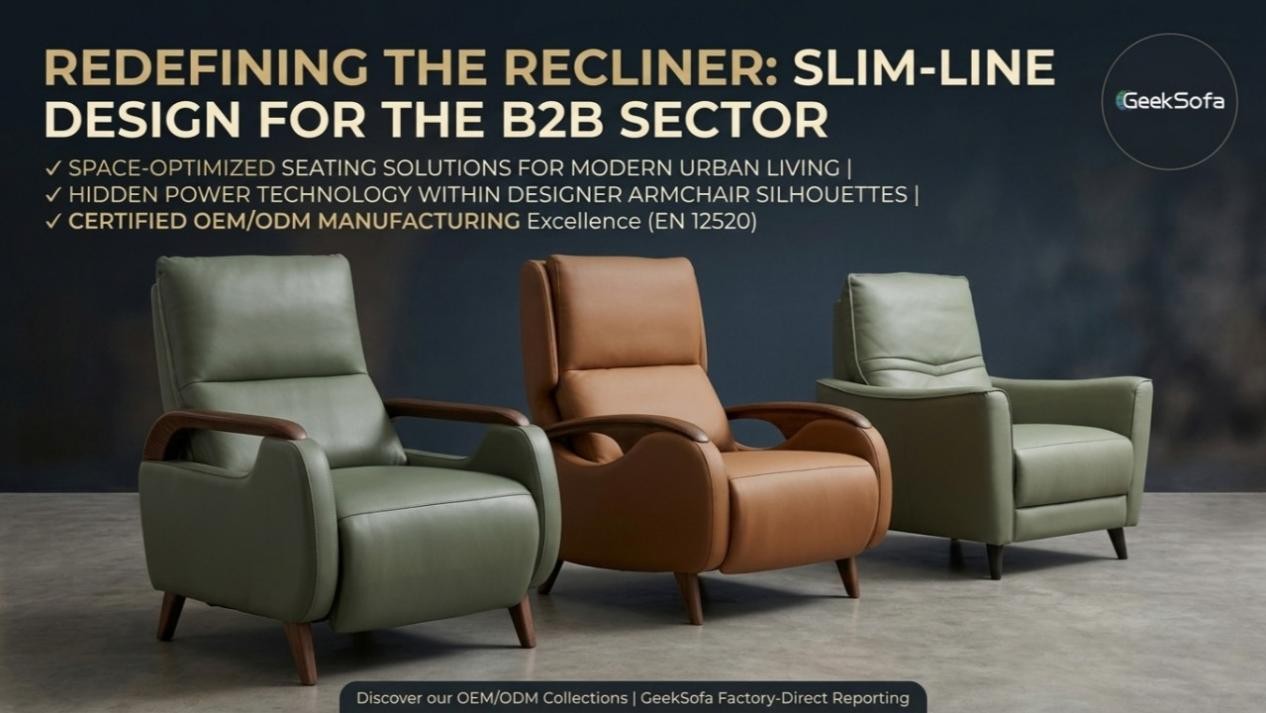
A Slim-line Electric Recliner is a high-performance seating solution characterized by a compact internal metal mechanism and a refined, narrow-profile frame.
Unlike traditional recliners that rely on thick padding for comfort, these solutions utilize advanced engineering to integrate full power-reclining capabilities into the sleek silhouette of a designer armchair.
For B2B buyers, this category represents a strategic response to the growing demand for multifunctional, space-saving furniture that complements the minimalist aesthetic of modern European interiors.
Market Insight: The "Visual Lightness" Requirement in Europe
In major urban centers like Berlin, Paris, and London, the "visual weight" of a piece of furniture is as important as its physical footprint. Professional buyers are pivoting away from the "overstuffed" look toward Space-Optimized Seating Solutions.
The current market reality is that apartment sizes are stabilizing, yet expectations for integrated technology are rising. Consumers want the comfort of a power chair but the appearance of a Scandi-style accent piece. This is where the Slim-Line Design becomes a business solution, allowing retailers to capture a younger, design-conscious demographic that previously avoided functional furniture.
Comparative Analysis: Traditional Design vs. Modern Engineering
To assist our OEM and ODM partners in collection planning, we have mapped the transition from traditional styles to current market-ready solutions:
Traditional Functional Seating:
- Heavy, floor-length skirts that hide bulky mechanisms.
- Thick, "pillowy" arms that occupy excessive floor space.
- Aesthetic often limited to home cinema or dedicated relaxation rooms.
The GeekSofa Solution:
- High-Leg Geometry: Tapered legs that provide a 12cm+ clearance, ensuring Robot-Vacuum Compatibility —a non-negotiable feature for modern households.
- Material Fusion: Combining tactile top-grain leathers with Solid Wood Accents, moving the product into the "Statement Piece" category.
- Zero-Wall Clearance: Advanced track systems that allow reclining without needing a large "dead zone" behind the chair.
Technical Excellence and E-E-A-T: The Factory Perspective
In the B2B sector, trust is built on data, not adjectives. As an industrial partner with a 150,000-square-meter facility and over 17 years of specialized manufacturing experience, GeekSofa operates under strict 5S Standards to ensure consistency across 500+ models.
- Certified Durability: Our products are engineered to meet EN 12520 standards, verifying structural safety and durability for domestic seating.
- Regulatory Compliance: With ISO 9001, BSCI, CE, and FDA certifications, we reduce market entry friction for our international partners, ensuring all electronic and mechanical components meet local safety laws.
- OEM/ODM Flexibility: We provide comprehensive Design Support, helping brands translate a creative sketch into a mass-producible, cost-effective reality without losing the designer's original intent.
Application Scenarios: Where Design Meets Utility
We see our global partners successfully placing these slim-line models in environments where traditional recliners simply do not fit:
- Professional Study & Home Office: Sleek enough to sit behind a desk, yet functional enough for a mid-day break.
- Boutique Hospitality: Providing hotel guests with a premium lounging experience without cluttering the suite's floor plan.
- High-Density Urban Housing: Maximizing the utility of open-plan living areas.
By focusing on the engineering logic of the frame rather than just the upholstery, we help our clients offer a product that is both a tool for comfort and a piece of art.
Let’s Discuss Your Next Collection
Strategic furniture sourcing is moving toward a consultancy-based model. We invite you to explore the micro-research behind our mechanical structures and material selections - China High Quality Recliners and Power Lift Chairs Manufacturer.
B2B Special Resource: Are you analyzing the weight-bearing logic of slim-line frames for your upcoming collection? Comment "SLIM" below, and I will share our latest "Internal Mechanism Engineering Report" and a digital catalog of our European-spec models directly to your inbox.
FAQ: Technical Inquiries for Furniture Professionals
Q1: How do you maintain stability in a high-leg, slim-profile recliner?
Stability is achieved through a widened footprint of the internal metal base and high-tensile steel construction. All GeekSofa models undergo center-of-gravity testing to ensure they remain stable even at full extension.
Q2: Are the wood accents sustainably sourced?
We offer various material options including FSC-certified wood sources for partners who prioritize environmental compliance in their supply chain.
Q3: What is the noise level of the electric actuators used?
We prioritize silent-drive technology. Our motors are tested to operate at low decibel levels (typically under 50dB), ensuring the transition remains smooth and inconspicuous in a quiet home environment.
Q4: Can we customize the upholstery to meet local fire retardant standards?
Yes. For the UK market, we use BS 5852 compliant foams and fabrics; for the US, we adhere to CA TB117-2013. We are well-versed in regional compliance.
Q5: What is the typical lead time from design approval to mass production?
For custom ODM projects, the prototyping phase usually takes 2-3 weeks. Once the sample is approved, mass production typically follows a 30-45 day cycle depending on the order volume and material availability.
Post time: May-12-2026


