



A good theater seat can look impressive in a product photo.
But when cinema operators, home theater dealers and project furniture buyers plan a real room, the question quickly becomes more practical:
Can this seating model work across different layouts, quantities, colors and repeat orders?
That question matters now because entertainment seating is no longer only about “having recliners.” It is becoming part of how cinemas, private theaters and entertainment rooms create a better viewing experience.
In Saudi Arabia, cinema is already a real operating market, not just a future concept. The Saudi box office reached around SAR 921 million in 2025, with 18.8 million tickets sold, 62 cinemas and 603 screens across the Kingdom. At the same time, CinemaCon 2026’s seating and auditorium design discussions have focused on recliner-style seating, tray-table functions and retrofit-friendly solutions that help venues improve the in-theater experience without rebuilding everything from zero.
On the residential side, the same direction is showing up in home entertainment. Yelp-related trend data reported a 562% rise in home theater installation project requests compared with 2024, showing that more homeowners are treating movie watching as a planned room experience, not just a screen-and-sofa setup.
For seating buyers, these signals point to one thing: the opportunity is there, but the decision is more complicated than choosing one good-looking sample.
Experience Is Rising, But Space Still Has Limits
Premium seating sounds simple from the outside.
A taller backrest feels more comfortable. A wider seat feels more generous. A side pocket adds daily convenience. A connected row looks more like a real theater room.
But for project buyers, every comfort feature also affects the room plan.
A wider seat may improve the sitting experience, but it can reduce the total number of seats in the room. A high backrest may create a stronger premium image, but it still needs to work with viewing angle, walkway space and room proportion. A connected row can make the room feel more complete, but it also requires careful planning around row length, armrest alignment and installation.
This is why buyers are not only asking, “Is the chair comfortable?”
They are asking, “Can this model still work when the room becomes real?”
A Sample Shows Style. A Project Model Shows Repeatability.
A sample chair is useful. It helps buyers judge the first impression, comfort direction, upholstery feel and workmanship.
But a sample cannot answer every project question.
A home theater seating model becomes more valuable when it can be repeated across:
l 10-seat rooms
l 20-seat layouts
l larger connected rows
l different interior styles
l repeat orders from existing customers
This is where a long-running project model gives buyers a stronger reference than a new sample alone.
A new sample may be attractive, but it still carries uncertainty: Will it be accepted by end users? Will the color fit different rooms? Will dealers be able to explain it clearly? Will the same model still make sense in the next order?
A repeat-order model does not remove every risk. But it shows that the design has already passed through real use, real feedback and real buyer decisions.
Connected Seating Is Bought Row By Row
Home theater seating is often marketed as a chair.
In real projects, it is usually bought as a row.
That difference changes the decision.
A tall backrest is not only a comfort detail; it changes the visual presence of the whole room. A wide seat is not only a luxury feeling; it affects spacing and quantity planning. A side pocket is not a dramatic feature, but it gives the end user a simple place for a remote control, phone or small item during long use.
These details matter because project seating must work as a system.
For cinema rooms, villa entertainment spaces and private theaters, the buyer is not only choosing a product. They are planning how people will sit, move, watch, relax and use the room over time.
That is why connected theater seating needs more than a polished final photo. It needs a model that can be arranged, repeated and adjusted without losing its comfort identity.
Color Is Not Decoration In Project Seating
Color choice also becomes more practical in this category.
A red theater seating row can create a bold cinema feeling. Black is often safer for classic theater-style rooms. Brown can match warmer interiors. Beige and gray may fit modern villas, lighter home theater rooms or soft luxury spaces.
For dealers and project buyers, the issue is not “which color is best.”
The real issue is whether one seating model can serve different room styles without forcing a new development cycle every time.
This matters in today’s furniture market as well. 2026 furniture trend discussions are not only about appearance; they are also pointing toward comfort, flexibility, performance materials and longer-lasting choices. Buyers are becoming more cautious about styles that look good for one season but are difficult to repeat, maintain or adapt.
For home theater seating, color flexibility helps one model travel across different projects while keeping the same structure and comfort profile.
What Buyers Are Trying To Avoid
The buyer’s pain point is not always dramatic.
Often, it is very practical:
l A model looks good, but the seat width makes room planning difficult.
l A color works for one project, but becomes hard to repeat later.
l A feature looks attractive, but does not add real daily-use value.
l A connected row looks complete, but lacks quantity flexibility.
l A new sample creates interest, but has no repeat-order reference.
These are normal project problems. They are also the reason many buyers prefer a seating program, not just a single chair.
A seating program gives them a clearer starting point: one model, multiple quantities, several colors, and a known comfort direction.
A Real Example From Production
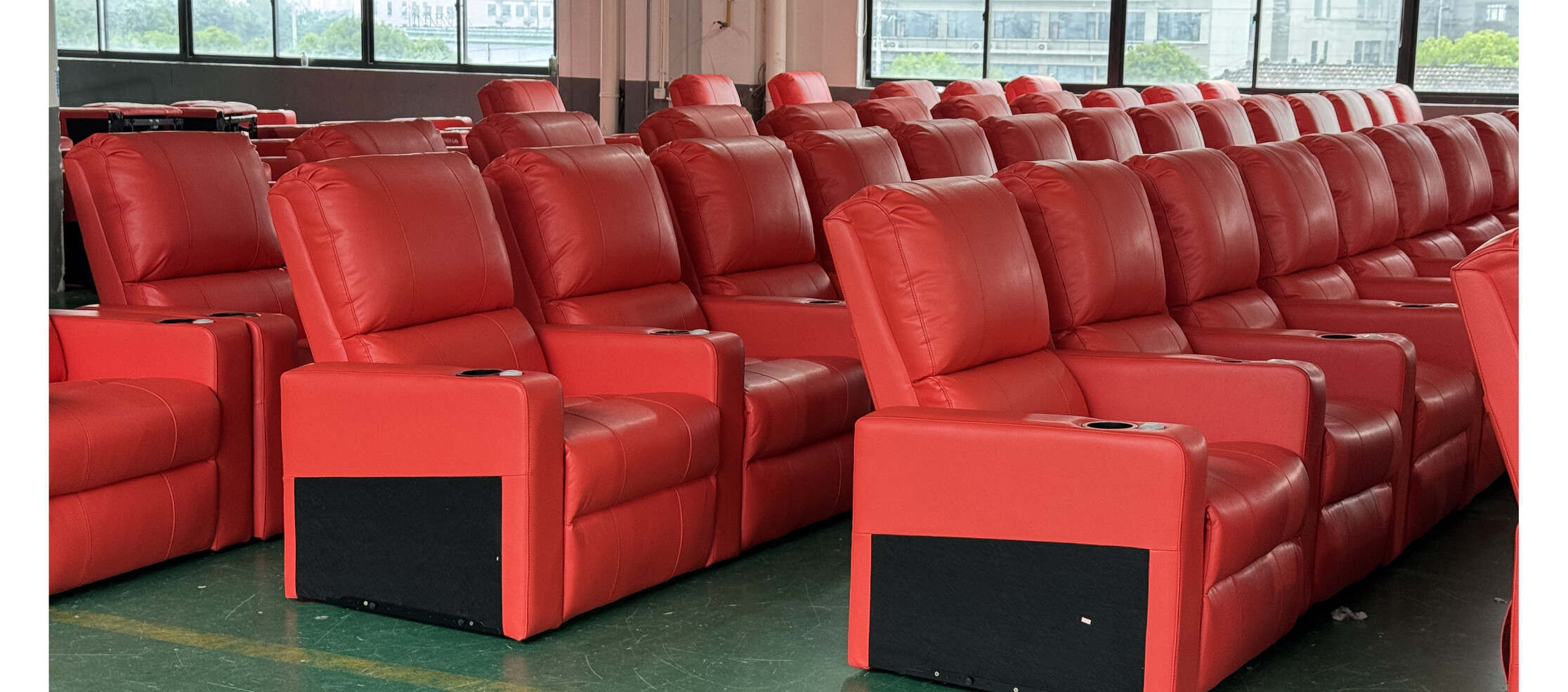
In one recent Geeksofa factory video, a red connected home theater seating row was introduced as a project model that has been produced for years, with repeat customer orders.
The value of that example is not that the chair is red.
The useful part is the combination of project details:
l a high and tall backrest for a stronger comfort profile
l a wide seat size for a bigger-chair feeling
l a side pocket for end-user convenience
l flexible row quantities, including 10 seats, 20 seats and larger layouts
l available colors such as red, black, brown, beige and gray
For buyers, those details answer a more useful question than “Is this a nice chair?”
They help answer:
Can this model support different rooms without restarting the decision each time?
Geeksofa’s role here is not only to offer a home theater recliner model. The more relevant value is supporting buyers with connected seating layouts, color options and repeatable project models across home theater seating, theater recliners and recliner sofa programs.
That kind of support matters when buyers need a product they can explain to customers, adapt to different spaces and reorder with fewer changes.
The Better Question For Today’s Seating Buyers
The market is not simply asking for more recliners.
Cinemas are looking for better experiences. Private home theaters are becoming more planned. Residential and entertainment spaces are paying more attention to comfort, flexibility and long-term usability.
So the better question is not:
“Does this sample look good?”
The better question is:
“Can this seating model keep working after the first order — across layouts, colors, room sizes and repeat demand?”
For home theater and cinema seating buyers, that is where real project value starts to appear.
A good sample opens the conversation.
A repeatable seating model helps the project keep moving.
Post time: Jun-08-2026


